I own a fine-mesh strainer with a diameter slightly larger than a wine glass. It’s a very handy tool for someone who likes to drink wine, because it separates the unwanted solids that occasionally accompany a bottle’s contents. The bottom of an older bottle is likely to contain sediment. Sometimes an old cork will crumble before it can be pulled. Very occasionally, a piece of otherwise sound cork will find its way into a bottle when an impatient operator rushes the process of pulling the cork.
The sheer mesh of the strainer keeps those solids out of the glass. However, I notice that some liquid will cling to the strainer. The device is great at stopping large pieces from moving from bottle to glass, but it also stops some small drops of liquid due to surface tension.
So, would you say that my fine-mesh sieve is effective at collecting liquid? If you have to answer that question yes or no, you can’t really say no. It does stop some liquid. You can’t say that it is entirely useless at preventing a liquid from flowing downhill.
That’s about the situation we are in with masks as a means to prevent the spread of the novel coronavirus.
As we know, the virus inhabits the respiratory system of an infected person. When it leaves the infected body, it travels on droplets that measure 0.1 to 1.0 microns in diameter. A micron is one-thousandth of a millimeter. These droplets are as small as one-tenth of that size.
An N95 respirator with all of its edges taped to the face will stop droplets that small. A cloth or paper mask lets droplets of that size through, whether heading toward the wearer or away. However, cloth masks are not entirely ineffective. A few droplets will cling to the mesh. The masks we wear are about as effective at stopping these droplets as my wine strainer is at stopping the flow of wine. Surface tension will stop a few droplets, but not enough to justify wearing the mask. The sainted Dr. Anthony Fauci made this point early in 2020 but then changed his mind and decided to lead from behind.
There is very little reason to wear a mask as a way of keeping sub-micron sized droplets from getting to you or keeping them from getting to someone else from you. Certainly, if you “believe in science” — if you believe in adjusting your behavior to accommodate the facts as revealed by scientific inquiry — there is no point in wearing any mask other than an N95 respirators and keeping it taped tightly to your face.
Yet, a recent survey found that 90% of people who have been vaccinated still wear a mask. 90%. Florida Governor Ron DeSantis made the point as well as anyone: If you are vaccinated, you’re immune. So, act like you’re immune.
Before you scoff at that last sentence, dear reader, because of the source cited, let me suggest that in your heart you agree. Prior to March 2020, did you wear a mask to avoid contracting measles, mumps, chickenpox or the rest? You didn’t. You didn’t need to (and you don’t need to now) because vaccination has made you immune. Or if you are, like me, transitioning from senior citizen to cranky geezer, you acquired immunity through infection when you were a child.
But those diseases are conquered, I hear you say. Not for the unvaccinated, they aren’t. They flare up from time to time. That’s why schools require vaccination as a condition of registration. But they don’t require masks to “stop the spread” of the measles.
Nor did you wear a mask to “stop the spread” of colds or the flu. Those have not been conquered. They are everywhere. Catching a cold or coming down with the flu is one of those burdens that we all bear. Perhaps you plan to wear a mask to “stop the spread” of the common cold after any remaining mask mandates are lifted. That’s your choice, of course, but there is no basis in science for government to require the rest of us to conform. Wearing a cloth or paper mask to prevent the spread of a virus that travels in packets that are far smaller than the mask’s mesh makes as much sense as wearing garlic.
The fact is that masks did not stop the spread of COVID-19. High incidence of mask wearing does not correlate to low incidence of disease. Some states with high rates of masking have low COVID-19 rates; other mask-wearing states have high rates. Other factors are at work having nothing to do with mask-wearing.
Vaccination, however, does provide effective immunity. Some lucky people have natural immunity to this infection (from T-cells). Others with less luck have acquired immunity through infection. The rest of us can obtain immunity through vaccination. When you add up all the individuals who are now immune one way or the other (and so far governments count only those who acquired immunity through vaccination), the likelihood is that we have achieved “herd” immunity.
Whether or not there is sufficient immunity among the population to reduce the risk of an out-of-control infection, wearing a mask has nothing to do with the gains in public health that we have achieved in the last few months. Yet nine out of ten disagree.
I take a walk through my neighborhood nearly every day. I see that many of my neighbors – who appear almost without exception to be friendly, positive, purposeful, and conscientious — demonstrate their independence of mind by displaying yard signs proclaiming their unconventional beliefs. (To be fair there are minor variations among these signs. One size does not fit all when it comes to pre-printed independent thought.) I have learned that you can buy them at Amazon. Just search for “in this house”.
One of those beliefs is “Science is Real”. When people proclaim that “Science is Real”, I don’t think they intend to include all of scientific inquiry. I think they mean “We believe the scientists who tell us that burning fossil fuels is leading to uncontrolled global warming climate change.”
Of course, what’s “real” is not “science” as such but, first, the facts uncovered by methodical inquiry using the methods of science and second, the theoretical explanations and mathematical models that fit those facts and yield to us an understanding, tentative and subject to amendment, of the place we inhabit.
There is a lot of science that is anathema to my mask-wearing sign-planting neighbors. Immunology? Epidemiology? Embryology? Psychometry? Population genetics? I wouldn’t count on a lot of support among the buyers and planters of pre-printed signs for the findings of any of these areas of study.
However, a computer model that shows a warmer earth 100 years from now counts as “science” and qualifies as “real”. So does the belief that you can use a sieve to catch water or an off-the-shelf cloth mask to catch something that measures one ten-millionth of a meter in diameter. These are illusions, nothing more. Wearing a mask in these circumstances is equivalent to posting a sign in your yard, and about as effective.
Sometimes a politician’s spontaneous comments reveal more than intended. My favorite example was the reaction of French premier Raymond Barre in 1980 when he received the news that a synagogue in the Rue Copernic in Paris had been bombed. His reflexive reaction was (paraphrasing) “This is terrible! Innocent French people could have been killed.”
When President Clinton was running for re-election, someone suggested that low tax rates ensure that individuals rather than government make choices about how their money should be spent. Mr. Clinton asked, “What if they choose the wrong things?” A man who cannot govern himself was concerned about the bad choices the common folk might make.
And just recently, Dr. Anthony Fauci chastised a widely followed podcaster who had argued that there was no reason for a healthy 21-year-old to receive a vaccination against COVID. Dr. Fauci pointed out that the vaccination benefits not only the recipient but all those with whom the recipient may come into contact. It was good to hear Dr. Fauci imply – even if he didn’t say it out loud – that vaccines confer immunity. This was a point on which America’s leading epidemiologist and part-time Caesar has expressed doubt on prior occasions. Apart from skeptics like super-scientist Jenny McCarthy, I believe this is the first time anyone in the medical field has expressed doubts about the efficacy of vaccination since Edward Jenner coined the term – and invented the process – in 1798.
However, the Fauci example is not really appropriate because he is not a politician. He is a scientist, America’s foremost authority on contagious diseases. Not a politician. When he tells the citizens of the United States “Do as you’re told” he is speaking as a scientist.
Let’s leave Dr. Fauci alone. Please. The spontaneous statement I want to focus on is one that Nancy Pelosi made years ago during her first tenure as speaker, during President Obama’s first term. Discussing the best way for government to stimulate the economy, Speaker Pelosi stated that issuing food stamps to poor people was the surest way to achieve the goal.
Like the first three examples, this one is prompted by an idea lurking unthought in the background. This time, the unnoticed idea is that consumption drives economic growth and prosperity. The more we consume, the better off we all are. Put a dollar or a food stamp in the hands of a poor person and that individual will spend all of it. A dollar in the hands of a rich person might be saved or invested instead. If it goes into the bank, it might as well never have existed. Consumption creates growth and spending fuels consumption.
Is that why the United States is a richer country than, say, Peru (not to pick on Peru)? Are Americans better at consumption than Peruvians? If only the people of Peru, Bangladesh, Chad, or Albania could be taught to consume, they too would be prosperous.
The “consumption creates prosperity” idea is clearly wrong, yet it persists. Consider a witticism of John Maynard Keynes. He suggested – I assume in jest, but with a purpose – that local governments could cure unemployment by placing cash in old wine bottles and hiding the bottles at various depths in the local landfill. Contractors would be invited to bid on the right to mine the wine bottles. The winning contractor would need employees to work the mine. Unemployment problem solved.
That’s very clever from one of the cleverest economists ever, but what I wonder is when the employer uncorks the bottles and pays the workers, what are they to do with their newly earned wages? Are they going to buy old wine bottles from other mining companies similarly employed in other towns? The plan would put money in the hands of people willing to spend it, but someone – someone who is not mentioned or thought of in the clever example Mr. Keynes offered – is going to have to produce something besides old wine bottles in order for the ad hoc mining operation to make any sense. You can’t build a prosperous economy by having us all take in each other’s laundry or collect each other’s thrown away trash.
I can offer a real-life example. Six days a week, a mail carrier delivers mail to my house. I put 99% of it into my recycling bin. Every other Thursday, the Waste Management people come and collect my recycling. I pay the mail carrier to deliver recycling material to my house and I pay the collection person to pick it up and carry it away. My role is to move it from my front door to my back curb, a job for which I am not paid. The only reason this self-contained system can continue is that I am bringing in a paycheck from outside the system to pay for delivery and collection.
Instead of using wine bottles full of spendable cash or the delivery and collection of recyclables as the model of what drives prosperity, imagine a simpler economy. (This parable courtesy of Peter Schiff.) Three people, Pat, Chris, and Jamie, live on an island. Each of them is able to catch one fish a day. One fish, gutted and cooked, can sustain the life of one person for one day. So, the daily GDP of this island is three fish. That’s what they produce and it’s what they consume.
One of them, Jamie let’s say, conceives the idea of a net. Jamie develops a design and works out what materials will be needed. Jamie is convinced that a person who uses a net built to this design can catch three fish a day without help from anyone else.
The problem is that Jamie needs all day to catch a fish. If Jamie does not catch a fish every day, Jamie faces starvation.
Jamie figures that it will take two days to build the net. Jamie decides to manage on two-thirds of a fish per day for those two days. Jamie will face hunger and want for two days but not starvation. On day one, Jamie divides his fish into three parts, consuming two-thirds while salting away the last third. Jamie saves rather than consumes that final third.
I forgot to mention that while you were reading the preceding paragraph, I assumed some salt. I am not an economist, but I can assume as easily as if I were fully credentialed.
After four days, Jamie has four pieces of fish, enough for two hungry days. Jamie takes two days off from fishing and builds a net. On the third day, Jamie tests it. If it works, Jamie can catch enough fish in one day to feed the entire population of the island. If it fails, Jamie and the other fishers will be back where they started.
The design is a good one. Jamie’s net catches fish. Jamie unveils the invention to Chris and Pat.
Now the island has the capacity to be more productive. One person can catch all of the fish that the island needs. That frees up the work of the other two to gather fruit or nuts, or to tend a vegetable garden. A brisk trade in fish, fruits, nuts, and vegetables results.
The island is more productive and more prosperous. It consumes more, but it wasn’t consumption that drove economic growth. It was investment in a piece of equipment that allowed one person to do the work formerly done by three. And investment was made possible because of deferred consumption. (Note, meanwhile, that the economy “lost” two life-sustaining fishing jobs.)
When you strip an economic model down that far, you don’t lose sight of the fact that production not consumption is what drives prosperity. Production is enhanced by investment – intelligent investment like a well-designed net. And investment is made possible by deferred consumption. That’s where the savings come from that can be invested to improve productivity.
The scaled down model tells us that Nancy Pelosi had the answer to a prosperous economy backwards. To hand out food stamps, you have to take the funds away from someone. If that someone would also have consumed his or her entire income, then it’s a zero-sum game. Those individuals who would have consumed all their income make an involuntary contribution to someone else who will consume it for them. But if the person whose income was contributed involuntarily would have saved some of his or her income, then by taking that investible potential out of the economy and handing it to someone who by design will consume all of it, you have reduced the productive capacity of the economy. You are forcing everyone to live on an allegorical fish a day instead of investing in a net.
If the first law of politics were “Do no harm” the corollary would be “Don’t subsidize consumption by confiscating savings that can be invested to improve productivity.” A second corollary would be “Don’t use the word invest when you really mean spend.”
Americans who value their personal liberty owe a debt of gratitude to Senator Rand Paul. The senator has not always been the most effective advocate for his libertarian philosophy, but he made up for a lot of earlier misfires in his handling of Anthony Fauci at a Senate hearing last week.
Under questioning, Fauci stated categorically that the CDC has never funded “gain-of-function” research conducted at the notorious Wuhan Institute of Virology, a leading laboratory that studies bat viruses.
Fauci’s statement is so evasive and misleading that it is effectively, functionally, and ethically a lie. The CDC did not write checks to the Wuhan lab. It did, however, fund the EcoHealth Alliance of New York, which used the funds to support “gain-of-function” research on bat viruses at the Wuhan lab. EcoHealth’s use of the funds was fully endorsed and commissioned by the CDC. Only two individuals have the authority to authorize “gain-of-function” research. One of them is Anthony Fauci.
The details are set out in a long article by Nicholas Wade published last week in the Bulletin of Atomic Sciences.
The article is well worth the time it takes to read it. Mr. Wade is as usual balanced and reasonable. He does not draw conclusions. He leaves that task to the reader. This reader thought there was only one conclusion to draw from the trove of detail that Wade presented.
Sometimes a small event provides a lens for viewing an individual’s character. I am thinking of the day last year that Fauci was invited by the Washington Senators baseball team to throw the ceremonial first pitch at their home opener. It appeared that Fauci could not decide whether to show off his pitching skills or his pick-off move to first base. He compromised by throwing the ball to a spot about half-way between first and home.
That could happen to anyone. Not everybody is Sandy Koufax. The revealing event happened during the game. A photo was taken of Fauci in the stands, seated between two companions. He has his mask down. The trio are not maintaining social distancing. Here is the photo:
When challenged, Fauci’s explanation was that he had taken his mask off to get a drink of water. The photographer happened to catch him in that post-sip instant when his mask was off.
There is a bottle of water in the photo. Perhaps Fauci had recently taken a sip. His relaxed posture indicates that he is not about to replace the mask. His explanation for the unmasked face in the photo is similar to his foot-stomping denials about funding the Wuhan lab.
He got away with that one. He has gotten away with similar verbal tricks. But his attempt to mislead the Senate and the public about his funding of the Wuhan lab backfired.
Every effective politician knows that the first thing to do with bad news is to get it off the front page. Fauci went into action. Fully vaccinated individuals no longer need to wear a mask or practice social distancing indoors or outside. The news media, with little interest in nailing a sainted scientist to the wall over a tiny unimportant technicality and already yawning from the effort of understanding “gain-of-function”, are only too happy to shout “No Mask” and bury the Wuhan funding story.
Mission accomplished.
Note, meanwhile, that the same CDC still requires children and staff at summer camps to wear masks and to practice social distancing outdoors.
The head of the CDC, a Dr. Walensky, told a news conference a month or so ago that she was filled with feelings of dread. Recently she announced that her feelings of dread have subsided. Policy changes to accommodate these emotions as they come and go.
The list of things this organization has been wrong about keeps growing. For the citizens to gain even a small measure of relief from the CDC’s ungrounded policy inventions, it was necessary for a United States senator to ask a question that caused a CDC official to stretch the truth to the point that the official’s credibility and integrity are now an open question. The agency changed a much-disliked policy in order to distract the public’s attention from the integrity of the CDC.
That’s what it takes to strike even a small blow for individual liberty in these United States in the current year. I’ll take the win, but it shouldn’t be this hard.
The number pi, or π, cannot be stated using conventional digits. It can only be approximated. The approximation begins with 3.14, so today, March 14, is “Pi Day”. The approximation continues ……159, so 1:59 on March 14 would be “Pi Minute”. If you wait 26 ticks of the clock after you reach Pi Minute, you would be in “Pi Second” – 3.1415926.
One of the oddities of the number is that you (or rather the nearest mathematician) can keep calculating to “Pi Millisecond” or “Pi Microsecond” or any level of precision you like. The number never resolves. The sequence of digits never ends.
A couple of years ago, I read an article about a pair of brothers whose life work was to calculate pi to the greatest precision possible. They wanted to see if anywhere in this sequence of billions of digits there might be a pattern, some sequence that repeats. They had found nothing at the time of writing.
According to the article, the brothers had calculated pi to such a level of precision that if you compared two circles, one a perfect circle with a circumference equal to that of the entire universe, the other a circle that you would get using their estimation of pi, the two circles spanning the universe would differ by the width of a molecule. Yet, the brothers or their descendants could continue to calculate for a century, or a millennium, or for as long as the earth lasts, and never fully state the number. It cannot be stated using digits.
It is an irrational number, meaning that it cannot be stated as the ratio of two whole numbers. No great shock here. It is also a transcendental number, meaning that there is no algebraic equation whose coefficients are rational numbers that will yield pi as the answer.
Yet this irrational, transcendental, incalculable number is present in nature in strange ways. If you were to make a chart that showed the hours of daylight for each day over a year, the result would be a sine wave, a function dependent on pi. The planets revolve around the sun along lines that can be calculated using pi.
Most astounding to me is the number’s appearance in one of the most profound and beautiful statements of mathematics, one that combines seven basic symbols in the strangest way.
eiπ+ 1 = 0
“e” is “Euler’s number”, the “natural” logarithm. It can be stated as the value of (1 + 1/n)n as n approaches infinity. Like pi, it is irrational and transcendental. Like pi, it can be calculated forever without resolving.
“i” is an “imaginary” number, the square root of (-1).
We take the exotic, irresolvable number pi and multiply it by the square root of the number (-1). We then raise “e”, Euler’s number, which is also exotic and irresolvable, to the power of the product of i and pi. That number, somehow, is negative 1. Add the number 1 to get zero.
It takes but a few paragraphs in the hands of someone who understands these abstractions to explain the basis for this profound identity. I do not understand it, but while I am actively reading an explanation, I can glimpse how it might all make sense to someone who has achieved mathematical satori. It’s like standing in a desert at night and seeing flashes of lightning from a storm that lies over the horizon. Something is being illuminated, but it is far in the distance and instantly returns to darkness.
It is a profound statement about the strangeness of the universe we inhabit that these two numbers, neither of which can be stated using the digits familiar to our daily lives, when combined with a number that cannot exist in nature, produce the most prosaic number we can conceive.
Of the three totalitarian movements that made the biggest impact on the history of the twentieth century, only one, German National Socialism, came to power through a constitutional process.
The other two, Soviet Communism and Chinese Communism, were launched in countries that had been exhausted by invasion and civil war. In October 1917 (old style, November in the west) the Soviet communists overthrew the provisional government that in February of that year had replaced the Czar. They then had to face two distinct threats. First, they fought counter-revolutionaries (the “White” forces). Second, after the Soviets withdrew from the First World War and signed a separate peace treaty with Germany, the western allies invaded Russian territory in a vain attempt to keep Germany occupied in the east. The Soviets used armed force to see off both threats and then turned that power on the unarmed civilian population whose reformation in accordance with Marxist doctrine was the stated objective of the revolution.
The Chinese Communists and Nationalists spent most of the 1930s fighting each other, but sometimes put their differences aside to fight Japan, who had been swallowing Chinese territory since 1931 and had been actively and formally at war with China since 1937. The rivals also had to face regional warlords whose ambitions were more limited than the two main contestants but nevertheless posed a genuine if only local threat. By the fall of 1949, the Chinese Communists, better organized and with better morale, were the last team standing. When the Nationalists departed the mainland for Taiwan, the Chinese Communist Party moved into a power vacuum.
The National Socialist party in Germany took office on January 30, 1933 when the German Head of State, President Paul von Hindenburg, appointed Adolf Hitler Germany’s Chancellor, in accordance with established constitutional procedure. Hindenburg did not like or trust Hitler or his party, but had run out of options. The National Socialists had achieved office, but constitutional constraints stood in the way of the absolute power they sought. Neither his coalition partners nor his political opponents knew how to use those constraints if Hitler and his party acted unlawfully after achieving power.
The National Socialist party was the largest in Germany but had far less than majority support. Germans went to the polls four times during 1932. Support for National Socialism was well below 40% in all four elections.
There was a presidential election in March where the incumbent, Hindenburg, finished with a plurality of 49.6%. Hitler came second with 30.1%. Hindenburg’s failure to achieve a majority forced a runoff. In the second round, in April, Hindenburg won a clear majority of 53%, while Hitler again came second, this time with 36.8%.
There were two legislative elections that year. On July 31, the National Socialists shocked the country by winning the largest number of votes and the largest number of seats in the Reichstag, the lower house of the German federal legislature. Although they had doubled their vote total from the previous election in September 1930, they had gathered no more than 37% of all votes cast. Because they had less than a majority and because every other party either hated them or feared them, the National Socialists were not included in the government. Lack of cooperation among the other parties forced a second legislative election in November 1932. This time, the National Socialists lost two million votes and 34 seats, although they remained the largest party with some 33% of all votes.
In that same election, the Communist party won some 16% of the vote. The two revolutionary parties, the ones that wanted to remake German society from the ground up, had won slightly less than half of all votes. In a backhanded way, that is a testament to the devotion of the German people to some form of rational governance. In the previous 20 years, they had suffered the loss of a war that many of them thought they should have won. That was followed by a humiliating peace treaty, hyperinflation that wiped out whatever savings had survived the war, and then, after a few years of respite, an economic depression that devastated the economy and generated among many citizens a sense of hopelessness. Despite all of that, half of the voters stuck with politicians who favored some form of rational politics. The problem was that the non-fanatics could not agree among themselves. The two fanatical parties used street violence and rabid propaganda to make their respective cases. The social democrats, centrists, and nationalists relied on intrigue and back-door deals to advance their modest agendas.
Hitler’s appointment as Chancellor provided his party with significant advantages, but challenges remained. The National Socialists had only three seats in the cabinet. Eight other positions were held by old-line conservative politicians whose objective was to keep Hitler and his violent street fighters in check. In the Reichstag, the National Socialists were forced to govern in a coalition with the Nationalist Party, but the two together did not have a majority of seats. If they could persuade the Center Party to join their coalition, they would have a majority in the Reichstag. The Center Party refused the offer. A new election, the fifth in the last twelve months, was scheduled for March 5.
Hitler and his colleagues had no intention of giving up power now that they had achieved it. They had a large force of “Storm Troopers”, a private army that broke up meetings of their political opponents. In those days, when politics was often an open-air affair, the ability to silence the opposition was invaluable. Then as now, a political organization that can prevent its opposition from making its case is well on the way to victory.
Even before Hitler came to power, the German establishment had demonstrated that they were unwilling to use legitimate force – the army and the police – to oppose National Socialist street fighters. The authorities had allowed widespread violence during the summer and fall elections in 1932.
With loyal partisans in control of the levers of state power and willing to wield them for raw partisan ends, Hitler’s chances in the March election must have looked good to him and his inner circle. Hermann Goering, one of Hitler’s chief lieutenants, was a cabinet minister “without portfolio”, but more importantly he held two posts outside the cabinet. He was president of the Reichstag, comparable to Speaker of the House. He was also the Interior Minister for Prussia, Germany’s largest state. That position gave him direct control over the largest police force in the country. It was clear from the first moment that the police would not take action against the National Socialists and their private army. Citizens soon learned that any overt opposition to National Socialism meant trouble from which there was no appeal.
Another factor in Hitler’s favor was the masterful use of propaganda by Joseph Goebbels. Also, many big industrialists had who had shied away from National Socialism before January 30, 1933, decided to buy a seat at the table by contributing large sums of money for Goebbels to use in the political campaign. (Germany did not have laws limiting campaign contributions as far as I know. Had there been such laws, the business supporters of National Socialism would undoubtedly have found ways to support the cause through unregulated in-kind contributions.)
It’s clear that Hitler and his cronies intended to remain in power after March 5, no matter the outcome of the election. (William L. Shirer provides ample documentary evidence in “The Rise and Fall of the Third Reich” first published as long ago as 1959.) Even so, if the downward trend revealed in the November election were to continue, cementing power would be more difficult. Despite the propaganda and the campaign contributions, there was no reason to think that the popularity of National Socialism was on the rise.
What to do? They had a plan for that. On the night of February 27, fires broke out in the Reichstag, gutting the building. The fire was immediately condemned as the work of Communists. The next day, February 28, Hitler asked the President to suspend seven sections of the German constitution that guaranteed individual and civil liberties. Freedom of the press, freedom of expression, and the right of assembly and association were suspended. In addition, “violations of the privacy of postal, telegraphic and telephonic communications; and warrants for house searches, orders for confiscation as well as restrictions on property, are also permissible beyond the legal limits otherwise prescribed.”
A government with those powers in hand is well on its way to establishing a totalitarian dictatorship.
How did the fire start? As William L. Shirer said in 1959, the full story may never be known. What we do know does not support the charge that the fire was set as part of a Communist plot, an accusation that the National Socialists immediately and loudly publicized.
As President of the Reichstag, Goering occupied the President’s residence down the road from the Reichstag. The two buildings were connected by an underground tunnel that connected them both to a central heating system. During the evening of February 27, National Socialist operatives carried gasoline and other tools of the arsonist’s trade through the tunnel to the Reichstag and set it alight.
However, when the authorities arrived at the burning building, the only person they found inside was an individual named Marinus van der Lubbe, a mentally challenged Dutch Communist. He had been overheard in a bar a few days earlier claiming that he had already attempted to burn several buildings in Berlin and that the Reichstag was his next target.
If he was not responsible for the blaze, how was it that he was in the building on the night of the fire? The answer was provided in an affidavit that was sworn in 1955 and filed with a German court but not published until 2019. Van der Lubbe had been arrested by the S.A., the Storm Troopers, shortly after his bar boasts came to their attention. On the night of February 27, an S.A. member named Hans-Martin Lennings was ordered to transport van der Lubbe to the Reichstag. Lennings’s affidavit states that when he arrived at the Reichstag, the building was already in flames. When van der Lubbe was arrested, Lennings and his companions objected, because of what they knew.
The blaze started in multiple locations. It wouldn’t have been possible for one individual to carry all of the chemicals and equipment into the building undetected. The task required a team. That much activity would have been detected had it taken place anywhere but in the underground tunnel connecting the Reichstag to the residence of the Reichstag president. Van der Lubbe didn’t have the mental capacity to plan the act or to carry it out. His presence in an S.A. infirmary until he was transported to the burning building gives him an alibi.
Of course, he was arrested on the spot, charged with arson, convicted, and put to death by guillotine. Four other defendants were acquitted. His availability as a scapegoat to shield the arsonists was an extraordinary piece of good luck for those planning to convert a dysfunctional state into a totalitarian hellhole.
The S.A. personnel who took van der Lubbe to the Reichstag were inconvenient witnesses. Except for Lennings, they were all murdered. He got word of the plan to liquidate him and was able to escape. He filed his affidavit in 1955 to ensure the survival of a record of what actually happened. He died in 1962.
The van der Lubbe complication is a nice example of how easy it is to persuade the public of a narrative that is pure invention. Almost always there will be some stray event that lends credibility to even the most unlikely constructions. To this day, there are respected commentators who attribute the fire to a Communist plot. The Deutsche Welle news organization allows that opinion among historians is “mixed”. Incidentally, in 2008 the German government pardoned van der Lubbe posthumously.
Despite a massive propaganda campaign in the week between the fire and the March 5 election, the National Socialists gathered only 44% of the vote. Together with their Nationalist Party partners, they had achieved a majority in the Reichstag. They were then able to eliminate opposition parties one by one and to suppress any political opposition. As they did so, they brought the leading government, cultural, economic, and social institutions of Germany onside. When President Hindenburg died in August 1934, the last bulwark against absolute power was gone. A plebiscite to combine the offices of Chancellor and President won 95% of the vote, placing absolute power in Hitler’s hands beyond recall. The National Socialists had achieved unity, the oft-stated goal of those who want unconstrained political power.
The National Socialists would likely have achieved their goals without the Reichstag fire. Still, if a political party wants to create in the public mind a fear that conspirators walk among us who are intent on doing great harm, it helps to have a specific and dramatic event to pull the imagined threat into focus. A concrete threat with compelling visual content – a historic building on fire – got the National Socialists and their coalition partners the parliamentary majority that enabled them to dispense with constitutional niceties and rule by decree.
The world of classical music has seen some notable borrowings, takings, and downright thefts over the years. For example, Bach’s concerto for four harpsichords, BMV 1065, was a transcription of a concerto for four violins by Antonio Vivaldi. The Vivaldi piece was part of a set of twelve concertos that the composer published around 1710 as his Opus 3. At the time, Bach had been developing the idea of using a harpsichord in concert with a full orchestra. When a friend returned from a trip abroad carrying a copy of Vivaldi’s Opus 3, Bach must have seen the possibilities inherent in Vivaldi’s compositions as soon as he opened the book. He transcribed five of the concertos soon after receiving the scores, but waited until 1730 or so to try his hand at converting the piece featuring four violins (Opus 3, No. 10) to a concerto for four harpsichords.
Did Bach at any point write to Vivaldi to ask for permission to transcribe his work? Bach’s transcriptions of these works stretched over a period of more than 15 years, ending no later than 1731. Vivaldi was alive and in good health throughout that time. (He lived to 1741.) I have seen no report of correspondence between the two. Admittedly, copyright law did not come into force in Germany until a generation after Bach’s death. Musical borrowings were common enough at the time. Still, law and custom aside, Bach, an honest man, might have asked permission. It doesn’t appear that he did. In the event, by the end of the 19th century, the source for BMV 1065 had been forgotten so that it came as a revelation, nearly two centuries after the works were written, that Vivaldi was the first inventor of Bach’s only concerto for four keyboards.
Beethoven did a bit of borrowing of his own. A music publisher and minor composer named Anton Diabelli wrote a simple little tune with the idea that he would ask all of the leading composers in the German-speaking world to write a variation on it. The compilation figured to be a nice little earner to sell into the market for music to be performed in the home.
If you were to measure the theme on a “simple” meter, the needle would be at the edge of the red zone marked “insipid”. Beethoven decided not to participate in the joint composition. Instead, he prepared his own entry, “33 Variations on a Waltz by Anton Diabelli”, Op. 120, said by Alfred Brendel to be the single greatest piece ever written for piano. That evaluation sidesteps the entire Bach keyboard opus, since that music was not written for the piano, although that is the instrument on which it is most frequently performed today. How Maestro Brendel places this piece above half a dozen Beethoven piano sonatas, or profundities from Schubert and brilliancies by Liszt, without naming others, I do not know.
Anyway, when Beethoven was done, he offered the finished work to Mr. Diabelli for publication, so this was a borrowing rather than an appropriation, but I wonder if at any point Beethoven asked permission to divert Diabelli’s innocent little jingle into the grand work that it became and away from the project for which it was originally planned.
There is a sinister accusation involving the composition of La Bohème in the 1890s, or rather the composition of two operas by that name at nearly the same time. Giacomo Puccini was having lunch with his friend Ruggero Leoncavallo. They were two of Italy’s rising operatic composers, possible heirs to the legacy of Giuseppe Verdi. Each of them had a hit opera behind him. Puccini’s Manon Lescaut (1893) is still performed to this day, as is Leoncavallo’s Pagliacci (1892). In fact, Leoncavallo had worked for a time on the libretto for Manon. They were close friends and collaborators.
As lunch progressed, conversation turned to “What are you working on?” Leoncavallo mentioned that he was working on the staging of the novel “Scenes from the Bohemian Life”. He planned to title his opera “La Bohème”. Puccini later said that his response was something like “What a coincidence! I’m working on an opera based on the same book.”
That’s not the way Leoncavallo remembered the conversation. Forever after, he claimed that Puccini stole the idea. Puccini’s publisher produced proof that his man had been working on the opera for months before that fateful luncheon. It didn’t matter.
Puccini’s attitude was “we will both compose and the public will decide”. Puccini’s opera is among the most beloved in the repertoire. Leoncavallo’s is a museum piece. Indeed, Leoncavallo proved to be a one-hit wonder. Pagliacci is the only opera he composed that is performed with any regularity today.
I will end with a case of outright unambiguous theft. In the piano’s infancy, Europe boasted two magnificent exponents of the new instrument as it emerged from the shadow of its predecessors. These were Muzio Clementi (1752-1832) and Wolfgang Amadeus Mozart (1756-1791).
When the Holy Roman Emperor Joseph II came to the throne in 1780, things looked up for the music business in his realm. His mother, Maria Theresa, did not like to waste money on useless hangers-on, so she spent little time, energy, or money on music. Her son was a music lover. He arranged a head-to-head contest between the two maestros. They competed for prize money; winner take all. The emperor and some of his family judged the competition.
After hearing the contestants, the judges decided to call the contest a draw. Supposedly, the judges decided on this result as a matter of diplomacy even though they agreed in private that Mozart was the better pianist. How anyone can be sure about an off-the-record conversation long after the fact is anyone’s guess.
Clementi accepted the outcome with grace. He had great admiration for Mozart as a musician.
Much later, the pianist Ludwig Berger recalled him [Clementi] saying: “Until then I had never heard anyone play with such spirit and grace. I was particularly overwhelmed by an adagio and by several of his extempore variations for which the Emperor had chosen the theme, and which we were to devise alternately.”
Mozart on the other hand was not a good sport. He had no doubt that he was the true winner. He criticized Clementi’s performance and made a derogatory comment about Italians.
January 12, 1782, Mozart reported to his father: “Clementi plays well, as far as execution with the right hand goes. His greatest strength lies in his passages in 3rds. Apart from that, he has not a kreuzer’s worth of taste or feeling – in short he is a mere mechanicus.” In a subsequent letter, he wrote: “Clementi is a charlatan, like all Italians. He marks a piece presto but plays only allegro.”
The first piece of serious music that I ever got to know was Mozart’s 40th Symphony, K. 550 in g minor. He has always been my favorite composer, the one whose music I would take to that desert island if I could take but one. Still, even his most fervent admirers have to admit that he could be an ass, and was on this occasion. In Mozart’s defense, he really needed the money. He had no steady income. Clementi was supported by a wealthy patron in England.
If revenge is a dish best served cold, Mozart waited ten years for his chance. He remembered one of the pieces that Clementi performed at the 1781 competition, his Sonata in Bb, Opus 24, No. 2. You can see and hear it performed by Zenan Kwan here (and I would say that after you get past the first two minutes of the piece, the main reason to continue watching and listening is to witness Ms. Kwan’s artistry, skill, and musicianship):
It’s easy to see why Clementi chose this piece for the competition. It displays brilliant passage-work and requires the hands to play independently at times. In its opening bars it demonstrated Clementi’s ability to extract rapid-fire repeated notes from the instrument. This is an effect that is permitted by the action of a piano as the key lifts and drops a hammer. The plucking action of a harpsichord is not well suited to playing rapidly repeating notes.
This is pleasant music requiring a high level of technique, but it is not especially deep. That opening theme shows off the piano and the artist, but doesn’t go anywhere and is not developed with any particular skill.
Mozart tucked that opening theme away in his active and copious mind and pulled it out ten years later when he found a use for it. The overture to The Magic Flute, K. 620, opens with a solemn introduction. After some 90 seconds, it leads to the theme that will dominate the remainder of the overture. This is lifted directly from the opening bars of Clementi’s sonata: eight repeated notes and a turn followed by eight more repeated notes and so on. The theme is taken up by one section of the orchestra after the other in fugue-like fashion until the entire orchestra gives us the tune in unison. From its first appearance the theme infuses and saturates nearly every moment of the overture except for a brief respite when the mysterious chords that opened the piece intervene for a few seconds. After that, the repeated notes theme is reintroduced in a minor key and is further developed right to the coda.
Sir Neville Marriner and an unnamed orchestra (evidently not the Academy of St Martin in the Fields, his everyday band) provide a fast-paced virtuoso performance here:
Watching this performance, you get the sense that Sir Neville knew how to run a happy ship.
In later years, those who didn’t know assumed that Clementi had lifted the theme from Mozart. When the score was republished, Clementi took to appending a note confirming that he wrote it ten years before Mozart used it.
There is no question that Clementi was the wronged party. Neither is there any question that the jaunty little theme he wrote would have done nothing but gather dust over the years had it not been repurposed by the monumental talent who stole it.
If Mozart was exacting revenge for receiving only a half point in 1781 instead of a win, the pleasure did not last long. The Magic Flute premiered on September 30, 1791. Mozart fell ill in late November and died on December 5 of that year at the age of 35. Because he was neither moneyed nor titled, he was buried in a “common” grave, along with countless others who like him did not qualify for a permanently marked final resting place. Clementi lived to 1832, dying in England, his adopted country, at the age of 80. He was buried in Westminster Abbey, a rare honor.
Las Meninas (the Ladies-in-Waiting) is a fascinating painting by Diego Velázquez, finished in 1656. The scene is a large room in the royal palace in Madrid. Some eight individuals are figured. Five of them are looking directly at the viewer.
One of those staring at us is a child, perhaps five years old, the daughter of the king and queen of Spain. Another is a man in the background of the painting. He has stopped to turn as he is leaving the scene, exiting through a door in the back wall. Something has caught his attention. The open door admits additional light to the dark room.
The most interesting person examining us is the painter himself. He stands before a large easel. We see part of the back of the easel – the full width is outside the frame – but we don’t see the work in progress. He is holding his brush and palette while examining his subject to decide where to apply the next artful dab of oil.
Why are these people staring at us? What have we done to garner their attention? Further examination reveals that their gaze is directed not at us but at two individuals we overlooked — the king and queen themselves. These two are standing outside the frame, their presence revealed by a reflection in a mirror hanging on a wall a few feet behind the artist.
The effect is dizzying. We are looking at a group of people who are themselves looking at the subjects of a painting being created inside the picture. The pair being painted stand outside the frame, but have been brought into view through their reflection in the mirror behind the artist who is painting himself in the act of painting them while we look on.
This stunning display is first cousin to the even more complicated feats performed by Miguel de Cervantes over the course of the 1,000 pages of Don Quixote, the first part of which – a mere 500 pages long — was published in 1605, half a century before Velázquez finished Las Meninas.
Don Quixote is a novel where books and stories are as much a part of the tale as the characters. It was a library, or the effect of reading the books in it, that put in motion the three most famous road trips in fiction. The good Don is presented to us in the very first chapter as someone who “spent his times of leisure – which meant most of the year – reading books of chivalry with so much devotion and enthusiasm that he forgot almost completely about the hunt and even about the administration of his estate . . ..”
He sold arable land to buy books on chivalry. And, according to Cervantes, he was so moved by them that he spent all his time trying to understand them. He spent “his nights reading from dusk to dawn and his days reading from sunrise to sunset, and so with too little sleep and too much reading his brains dried up, causing him to lose his mind.”
We are to believe that the main character in a book of 1,000 pages went mad from too much reading. Should the reader who takes on a book of this length worry about the toll that is about to be exacted on his or her sanity? Or is it possible that our narrator exaggerates?
A narrator who delights in maneuvering himself and his characters into and out of the frame of his story presents Don Quixote’s madness as a fact. We are told from the outset that virtually everyone who comes into contact with the knight understands that he is mad. And indeed, in Chapter 2, the good gentleman’s strange conduct begins to confirm the narrator’s thesis. Don Quixote gathers an old lance and shield that are lying about his house together with a suit of armor that belonged to an ancestor. The armor is missing some items. Don Quixote uses materials on hand to fabricate improvised replacement parts. Early one morning, he saddles his horse, puts on his makeshift kit, and rides out as a knight errant looking for adventures. He is on the road before anyone else in his household is awake.
That first sortie ends the next day when a farmer comes across a man lying in the road, wearing a suit of armor. The farmer recognizes Don Quixote and delivers him home. The Don’s niece and housekeeper put him to bed and consult two of his friends, a priest and a barber. They deduce that the Don’s library is the source of his obsession. Together, they review his books, burning those that are deemed unsuitable and walling up those that escape the flames. The priest offers learned commentary on many titles as they pass through his hands on their way to one fate or the other. In an early hint at some of the mirror-tricks yet to come, Cervantes was the author of a book that the priest praises. The priest acknowledges that Cervantes, a man who has had a difficult life, is a friend of long standing.
Still, the sole authority for the proposition that Don Quixote is mad is the book’s narrator. How reliable is this person? We soon learn that the narrator is retailing third-hand information.
In Chapter 8, Don Quixote sets out on his second quest. He learned from his first effort that he needs the assistance of a squire. Knights errant in books always have squires. It was a mistake to begin without one. From now on, he will have the company of his neighbor, the farmer Sancho Panza.
Their first adventure together is the famous charge against the windmills, which occupies only a page at the start of Chapter 8. Although offered as an illustration of the knight’s madness, the windmill incident is an example of Don Quixote’s mental agility. Sancho warns his boss to stay away from the windmills, but where Sancho sees windmills, Don Quixote sees giants who must be slain.
Don Quixote’s encounter with the moving arm of a windmill breaks his lance and leaves him and his horse lying on the ground once again. As Sancho helps put knight and horse back together, he reminds the boss of his warning not to charge the windmills. What just happened is proof, Sancho argues, of the wisdom of his caution.
However, Don Quixote has the philosopher’s gift. Sancho’s belief that he sees windmills can be explained. The world is more complicated than a naïve realist such as Sancho is able to comprehend. The giants appear to be windmills due to the workings of an evil enchanter who uses his powers to combat the virtuous knight. Sancho thinks he sees windmills, but he sees giants made to appear as windmills. This technique, explaining contrary evidence as mere phantasms in a world whose complexity others fail to grasp, is invaluable. Without it, much of politics, religion, philosophy, social science, and economics would be impossible. Don Quixote makes frequent and elegant use of this device.
As Chapter 8 ends, the windmills are a memory. The Don is on a different adventure, which leads to a fight between himself and a Basque. As they exchange blows, the narrative breaks off. Cervantes reveals the astounding fact that until this point in the narrative he had been working from a written text, one that ended without recounting the outcome of the fight. Eight chapters in, we learn that the narrator does not have personal knowledge of the events he relates to us. In this story about stories, he is working from someone else’s text. (The translator Edith Grossman points out that this device was often used in chivalric romances.)
The true source of the tale is now revealed. It is as if the mirror in Velázquez’ studio has been mounted on the wall, waiting to receive the image that will be made to appear as a reflection when the subjects have arrived.
Cervantes tells us that the true history of Don Quixote was written by an Arab named Cide Hamete Benengeli. Cervantes tracks Benengeli’s manuscript to Toledo. There he finds a Spanish-speaking Moor and stands over him for weeks as the translator renders Benengeli’s Arabic text into Spanish.
How reliable a historian was Benengeli? Is he likely to be a fair biographer of the life of an aging member of the Spanish gentry, an obscure self-proclaimed knight who lives in an even more obscure corner of the land reclaimed from the Moors only decades before the Arab historian took up his pen? Cervantes argues that Benengeli, an Arab and therefore the sworn enemy of all Spaniards, must be inclined to disrespect Don Quixote. Therefore, he can be trusted when he praises Don Quixote.
Reflections, still too vague to be resolved, begin to appear in the mirror. At this same point in the creation of Las Meninas, Velázquez has taken up his brush and palette and is preparing to paint himself painting the pair who stand outside the frame.
And what about the translator? There is no one to vouch for his accuracy. Does he have an unspoken agenda? In a later chapter where we learn something of Sancho Panza’s domestic life, the translator attaches a note telling us that he finds the events in this chapter to be unbelievable but is rendering the text faithfully despite his misgivings. But in how many other passages did he allow his good sense of the probable to override the commitment to textual fidelity that should be part of every translator’s creed?
The First Part is merely a warm-up for the complications that will be piled on in the Second Part. When Cervantes finished what is now the First Part in 1605, he may have thought that he was done with Don Quixote and Sancho Panza. He was pulled back into the Quixote game when a gentleman using the pen-name Alonso Fernandez de Avellaneda wrote and published a spurious sequel to the novel.
Cervantes was so outraged by the publication of Avellaneda’s false Second Part that he wrote the true Second Part, published in 1615, ten years after the First Part, about a year after the appearance of the fake sequel. The true Second Part opens a month after the First Part ended. Don Quixote is home, recovering from his second quest when Sancho visits to tell him that they are celebrities. A book of their adventures has been published. Now, all of Spain can talk of nothing but the marvelous adventures of the knight and his squire.
The unlettered Sancho is able to provide details about the book’s popular reception only because one of their town’s most eminent citizens, one Sansón Carrasco, having earned a bachelor’s degree at university in Salamanca, has just returned home with news of the book’s reception.
Don Quixote is pleased to hear this report. Sancho brings Bachelor Carrasco to Don Quixote’s house. Sansón tells Don Quixote that the book is not free from criticism. Some readers do not approve of the way Don Quixote is beaten and injured during the course of the First Part. Many are unhappy with the insertion of extensive material about characters and stories that appear to be unconnected to the famous pair. Vladimir Nabokov made the same criticism 75 years ago — this reader does not disagree – but Cervantes got there first with one of his mirror-tricks.
Sancho raises a good question. Throughout the novel, Sancho and Don Quixote encounter many unusual and interesting people, many of whom have a complicated story to tell. You can’t swing a cat in this part of Spain without hitting an articulate and long-winded raconteur who has been patiently waiting for an audience. However, between episodes where the pair hears these tales and other segments where Don Quixote does battle, the two main characters spend their time traveling and conversing. Their dialogs are one of the book’s principal charms. Sancho notes that these conversations took place in private, with no historian in sight. How, then, did Cide Hamete Benengeli manage to reproduce these conversations accurately, word for word, to put them in his book? It’s an excellent question, one that might be asked of any third-person narrator. How do you know all of these private details? Don Quixote suggests that it is the work of enchanters. No other answer to the question – which is of course asked in a private conversation and duly reported — is offered by historian, translator, or narrator.
No matter. Invigorated by these reports of his fame, Don Quixote decides to begin a third quest to complete the unfinished work of the previous two.
At the end of the First Part, the pair had been on their way to Zaragoza. They get back on the road. As they travel, they encounter people who already know of the knight and his squire because they have read the First Part. The book has itself become an element in its own story, just as the figures in Las Meninas make eye contact with the out-of-frame subjects being painted inside the frame.
Further complications ensue when the famous pair encounter the spurious Second Part. They are in a tavern when they hear other patrons discussing the novel. However, it is clear to Don Quixote that the book his fellow guests are discussing is a fraud.
How does he know this? The guests refer to Señora Panza by an incorrect name. Throughout the book Don Quixote frequently corrects mispronunciations and malapropisms by other characters. He is a man who is punctilious about the details of the many stories presented to him over the course of the novel. When he hears such an obvious gaffe as a mistake over the name of the wife of the second-most important character in the novel, Don Quixote becomes enraged.
Yet, this rage over a mistake about the name of Señora Panza is Cervantes having another little joke. Scholars have noted that in the First Part, Cervantes used several incorrect names to refer to Mrs. Panza. Whether these errors are the inadvertent result of hasty composition or artifacts carefully deposited in the tale so as to be available if needed later, who knows?
Speaking of items deposited with forethought, some scholars speculate that the author of the spurious Don Quixote is none other than Miguel de Cervantes himself. The true identity of Alonso Fernandez de Avellaneda has never been discovered. Is it possible that the spurious Second Part is yet another mirror in the ever-expanding self-reflecting universe that Cervantes has created for the entertainment of his readers? (Nabokov offers without comment the interesting information that Cervantes had a great-grandmother whose family name was Avellaneda.)
So, we have a work written in Spanish by Miguel de Cervantes, which he pretends is a translation of a history written in Arabic by a man in fact created by the author and translated into Spanish by yet another individual whose character, skill, and reliability are themselves the creation of Señor Cervantes and subject to his whims.
To complicate matters further, at one point, at least, the historian slips and has to be rescued by the translator. In the Second Part, Chapter 27, Cervantes tells us that:
Cide Hamete, the chronicler of this great history, begins this chapter with the words I swear as a Catholic Christian…, to which his translator says that Cide Hamete swearing as a Catholic Christian when he was a Moor, which he undoubtedly was, meant only that just as the Catholic Christian, when he swears, swears or should swear the truth, and tell the truth in everything he says, so too he was telling the truth, as if he were swearing as a Catholic Christian, when he wrote about Don Quixote . . ..
Is it Don Quixote who has gone mad from too much reading?
As the two characters who issue from this invented collaboration wander through the Spanish countryside, their images are captured in the mirrors that Cervantes provides for his and our entertainment. Those images include a patchwork of episodes that are connected by nothing more than the fact that the knight and his squire participate in them. These quilting squares include dialogs between the famous pair; adventures and misadventures where the knight does battle, giving and receiving injuries; long-winded intervals where the pair hear the detailed and fantastic stories of those they encounter; other intervals where they are subjected to elaborate hoaxes; Don Quixote’s learned discourses on several subjects; and even a detour where a character reads out loud an entire novel, a story with no recognizable connection to the episodes that precede or follow it.
Cervantes would not be able to present this massively decorated wreath of episodes had the knight and squire remained in the local habitation in which the fictional historian placed them at the beginning of the tale. Just as Las Meninas doesn’t work if the king and queen are shown standing in the studio to pose for their portrait, Don Quixote won’t work if the knight and squire stay home waiting for the strange people, places and events they will encounter to come to them. The knight and squire must go on the road.
Don Quixote’s supposed madness is an efficient device to get the pair moving so that the string of episodes detailing their adventures can be presented to the reader. But Don Quixote’s character overwhelms the simple plot device that his author has crafted.
For a man whose brains are said to have dried up, Don Quixote is able to hold his own throughout the mental challenges that Cervantes sets for him. The knight is able to speak eloquently and to argue rationally on every subject that comes before him. If Don Quixote is mad, how does he manage to spout a detailed analysis of the (mythical) Golden Age? Later, he argues with a priest (not the hometown fellow, a different one) over the reality of knights errant by citing chapter and verse from the books of chivalry he has read. Does the priest want to make the point that you cannot prove the reality of things unseen by citing passages in a book? (He does not.)
He warns a writer about the dishonesty of publishers. (Cervantes’s publisher had cheated him of the proceeds of the First Part.) He discusses the relative strengths of the pen and the sword. Throughout, he is a stickler for correct pronunciation and word usage.
He can cite Homer and Virgil and many other poets. He speaks authoritatively on many subjects. But the key point I will cite for the proposition that Don Quixote is in command of his faculties is the statement he makes in the First Part, Chapter 25.
Recall that when Don Quixote set out on his second quest, he acquired the services of a squire, a necessary component of a knight’s retinue. Before that, however, he had acquired something even more important. Every knight errant must have a fair maiden, beautiful, virtuous, chaste, and distant, who commands his heart and for whose sake he undertakes the dangers that define his existence.
To fill this role, Don Quixote nominates a local peasant girl named Aldonza Lorenzo to whom he gives the invented name Dulcinea del Toboso. (Toboso was the village where she lived.) There is no indication in the history that Don Quixote ever talked to her or that she had ever heard of him. Sancho knows her at first only by the name Dulcinea that Don Quixote has given to her. He assumes that she is a real princess. When in Chapter 25 he hears her true identity, he is able to tell Don Quixote that the lass fails to meet any of the criteria for a knight’s fair lady and that she falls particularly short of the mark in the chastity department.
Don Quixote is unfazed by this information. He replies:
[N]ot every poet who praises a lady, calling her by another name, really has one. Do you think the Amaryllises, Phyllises, Sylvias, Dianas, Galateas, Alidas, and all the rest that fill books, ballads, barbershops, and theaters are really ladies of flesh and blood who belong to those who celebrate them? No, of course not, for most are imagined in order to provide a subject for their verses, and so that people will think of them as lovers and as men who have the capacity to be lovers. And therefore it is enough for me to think and believe that my good Aldonza Lorenzo is beautiful and virtuous; as for her lineage, it matters little, for no one is going to investigate it in order to give her a robe of office, and I can think she is the highest princess in the world. . .. And to conclude, I imagine that everything I say is true, no more and no less, and I depict her in my imagination as I wish her to be in beauty and in distinction . . ..
(Emphasis supplied.)
The most sane and sober among us, even you and I, dear reader, will occasionally allow our wishes and sentiments to dictate our thoughts. When we fall into this trap, how many of us have the insight and dispassion to admit out loud what we are doing? Yet here we have a supposed madman, a fellow who charges windmills on horseback with a lance while clad in a suit of armor, stepping outside of himself with an ease that would stir the admiration of a psychoanalyst.
How to explain these divergent elements in his character? The answer depends on where you stand when you consider the question.
If you step outside the frame, Don Quixote’s madness is a convenient plot device. It gets him out on the road where the many facets of his personality can reflect the parade of often eccentric, sometimes grotesque characters and improbable events that he and Sancho Panza encounter.
If you decide to answer the question while standing inside the frame of the novel, then you might speculate that Cide Hamete Benengeli failed to achieve cultural competence. He evaluated the conduct of a Spanish gentleman using the standards that he would apply to his fellow Moors. Perhaps conduct that Cide Hamete would consider insane when observed in a countryman would be considered by a Spaniard to be merely eccentric when observed in a Spanish gentleman.
Or perhaps it is the translator who is a fault, if there is fault to be assigned. Is it possible that Arabic makes more subtle distinctions among mental conditions than does Spanish, or vice versa? The difficulty may be compared to the challenge that an Inuit and a native speaker of English would experience were they to try to exchange information about a snowfall. Could the same problem afflict the attempt by an Arabic speaker to convey Don Quixote’s mental condition to a Spanish speaker?
Each reader will draw his or her own conclusion. The best way to test one’s thinking on the subject is to go back to page one and read the book again.
In a presidential election, how does a state decide how to award its electoral votes? The Constitution provides a clear answer in the second clause of Article II, Section 1:
Each State shall appoint, in such manner as the Legislature thereof may direct, a Number of Electors equal to the whole Number of Senators and Representatives to which the State may be entitled in the Congress; . . .
The Pennsylvania legislature has directed that the electors are to be chosen by the registered voters of the Commonwealth. Voters may cast a ballot at a polling place or may mail a ballot. In-person votes and mailed ballots must be received by 8:00 p.m. on election day, the first Tuesday after the first Monday in November.
The Pennsylvania Supreme Court was invited to extend the deadline in light of the coronavirus pandemic. They replaced the rules duly adopted by the legislature and granted the voters three additional days to return ballots.
The United States Supreme Court voted 4-4 to let that decision stand. Despite what the Constitution says, the electors in Pennsylvania will not be chosen as the legislature directs. They will be chosen as the courts of Pennsylvania direct.
This decision invites mischief. For example, there was a well-known senator from one of the fine states in the upper Midwest. He always won close elections. Several counties in the state were intensely loyal to him. They always made sure to report their vote totals after the other counties had provided their numbers. Cynics said that the loyal counties waited to find out how many votes they needed to produce before completing and certifying their counts.
That same drama has been known to play out in other states where the big cities tend to vote for Democrats and the smaller towns and rural areas tend to vote for Republicans (while the suburbs flip a coin or use one of those magic 8-balls). As soon as one side commits to a count in its districts, the other knows what it has to do to secure a win.
In pre-COVID days, one counterweight to this corrupt battle of wits was that both sides had to work against time. Once the target vote count was known, the remaining vote had to be certified within a matter of hours. That system started to break down in California in 2018, when late arriving votes gathered by private citizens, sometimes called “ballot harvesters”, flipped several House seats after the election appeared to be over.
In Pennsylvania in 2020, the initial count will be known on November 3. That will give the side that’s behind three full days to produce late arriving ballots. The deadline that the Pennsylvania Legislature imposed was likely designed to discourage if not prevent these tactics.
If anyone in Pennsylvania thought that the deadline should be extended, why didn’t they go to the Legislature to get the law changed? Perhaps because the method they chose saved a lot of time and effort.
It’s a terrible decision both in its result and because it takes power away from the institution that had the right to exercise it under the Constitution and arbitrarily transfers that power somewhere else.
How did the justices reach their decision? We don’t know, because they let the Pennsylvania decision stand without comment. The following is pure speculation.
Breyer: Why is everybody so technical? When the Constitution says Legislature, that must be shorthand for “the law-making authority of the State”. As our system has evolved, courts have become the law-making authority of the State. So, “Legislature” means “Courts”.
Sotomayor: I feel great empathy for people who cannot get their ballots in before an artificial deadline imposed by heartless people, mostly old white males, who fail to take account of how difficult it is for poor people to deal with this virus that Donald Trump has visited on them.
Kagan: The Pennsylvania Supreme Court was duly elected. They reflect the will of the People. I’m going with them.
Alito: “Legislature” means Legislature. They acted. That’s the law.
Thomas: “Legislature” means Legislature. They acted. That’s the law.
Kavanaugh: “Legislature” means Legislature. They acted. That’s the law.
Gorsuch: “Legislature” might mean different things in different contexts. In this case and in light of the particular issue in front of the Court, the balance of evidence is that “Legislature” means the legislature of the Commonwealth of Pennsylvania. I am open to further evidence either way should it be produced and presented in an appropriate manner. However, we are not authorized to speculate on what that evidence might look like until it is presented.
Roberts: I don’t like it when Senator Schumer and all those other senators get mad at me. I think – I hope – I know what they want. I’ll do that and hope I got it right. I don’t want to hear President Biden yelling at me at the next State of the Union speech with all those angry politicians yelling and razzing me like I did something wrong. One experience like that was enough to last for a lifetime appointment.
Remember to vote if you haven’t already. Of course, if you live in Pennsylvania, you’ve got all week. If you live somewhere else, check with your local court. They will have the most up-to-date rules.
One last comment on coronavirus. I saw Bill Gates on TV last night complaining that President Trump is taking advice on COVID-19 from a pseudo-expert. He was referring to Dr. Scott Atlas. Mr. Gates has amassed one of the world’s great fortunes through the development of software, but that doesn’t qualify him as a medical expert nor as a judge of medical experts, real, quasi-, pseudo-, or otherwise.
Dr. Atlas is criticized by Mr. Gates and others (including Dr. Zeke Emmanuel, brother to Rahm) because he is thought to advocate “herd immunity”. Herd immunity is not a position to be advocated or opposed. It is a real-world effect that results from the spread of an infection through a population. A person who is immune to a virus does not transmit it to others. When sufficient numbers have achieved immunity, the ability of the virus to spread is reduced to the point that it is of limited danger even to those who are not immune.
The size of the portion of the population that is needed depends on how contagious the virus is. Measles can spread if less than 95% of the population (the “herd”) is immune. On the other hand, rubella (formerly “German” measles) can be stopped when 80% of the population is immune. (Both percentages from Wikipedia.)
We don’t know how much of the population must be immune from COVID-19 to achieve “herd” immunity. I have seen suggestions between 40% and 60%, but no one knows. (Wikipedia says 60% to 75%.)
So, how does an individual achieve immunity? One way is to become infected with COVID. A second is to be born with T-cells that confer immunity. The third way is to be vaccinated.
We don’t have a vaccine. Most of us don’t have T-cell immunity. So, the alternatives are (1) close as much as possible and wait for a vaccine or (2) open the economy back up while protecting the vulnerable. If we adopted the second alternative, we would quarantine anyone with symptoms of the disease and ask anyone who is vulnerable to isolate. The vulnerable are the elderly and those with co-morbidities.
That means letting everyone out to pursue happiness and economic gain as they will, to let freedom ring except for people who are ill with the disease or are in a vulnerable classification.
Remember, for those who are not elderly and do not have co-morbidities, the survival rate if they are infected with COVID-19 is in the neighborhood of 99%. The survival rate is higher than that for the young, a bit lower as you approach 50. Even for those in the vulnerable groups, it’s worth keeping in mind that most of the 5% or so of people so classified who die with COVID-19 infections in fact died of something else, or died of a combination of factors one of which was COVID-19. So says the CDC.
This is not a matter of advocating for “herd immunity”. It is a recognition that once we isolate the sick and the vulnerable, for the large majority of the population, the psychological, economic, and above all moral benefits that derive from living as free people in a self-governing society massively outweigh the risk of contracting an unpleasant but non-fatal illness.
Getting on the wrong side of a federal law enforcement agency can have devastating consequences, even for someone who has not violated the law.
Take the case of Nancy Black, reported by George Will a few years ago. She had captained a whale-watching vessel in Monterey Bay. One of her employees had whistled at a whale to induce the animal to remain near the boat. NOAA, the National Oceanographic and Atmospheric Administration, asked Ms. Black to send a video of the incident. They wanted to investigate whether the whistling constituted harassment of a marine mammal, a federal crime.
She sent the video after editing it to highlight the incident in question. Investigators found that Ms. Black had not harassed the whale. Although her interaction with the whale was innocent, the feds wanted her stopped. She was indicted for making a materially false statement to a government agency. Her crime was editing the video to highlight the information that demonstrated her innocence. At one point a dozen federal agents raided her home to remove computers containing years’ worth of data that she had collected.
Or consider the case of Jim Brown, a Merrill Lynch executive who testified before a grand jury during the Enron investigation back in 2002. A prosecutor asked him about a phone call which, it was alleged, was part of a financial conspiracy. Mr. Brown had not been part of that telephone call. He didn’t have any first-hand knowledge. The prosecutor told Brown that it didn’t matter whether he had participated. What was wanted was Brown’s understanding of what was discussed “whether it was accurate or not”.
Unfortunately, Mr. Brown’s understanding of what was said on that call was not correct. It was later shown that the content of the call differed from the information Brown had been given and had repeated at the prosecutor’s direction. That will happen when you report on an event in which you did not take part. Brown was charged with perjury and obstruction of justice.
The prosecutor was Andrew Weissman, later the leader of the Russian collusion investigation for which Robert Mueller acted as the titular head. The Enron task force reported to Christopher Wray, then the head of the Justice Department’s Criminal Division, now the director of the FBI.
These are not isolated incidents. For more detail, see Sidney Powell’s “Licensed to Lie”; Conrad Black’s “A Matter of Principle”; Dinesh D’Souza’s “Stealing America”; or Harvey Silverglate’s “Three Felonies a Day”. There are plenty of other sources.
Which brings me to Tony Bobulinski. He is a former business partner of Hunter Biden. He says that he can confirm the authenticity of some of the materials found on the Hunter Biden laptop that you have been reading about on your favorite news sites and hearing reported on TV. (Irony.)
He claims to be able to demonstrate that Mr. Biden’s protestations of innocence in connection with the flow of foreign money from China and Ukraine toward members of the Biden family are false.
We now learn that the FBI took possession of the Hunter Biden laptop in December 2019. At a time when the federal establishment was honeycombed with whistleblowers on matters dealing with Ukraine, was there an FBI whistleblower who breathed a word about the laptop to the House Intelligence Committee, the House Judiciary Committee, the Senate Judiciary Committee, the White House, or anyone in the media?
The FBI got the laptop from a computer repair person. The repair guy found the potentially damaging materials in the course of trying to fix the computer. He contacted the FBI through an intermediary. The FBI initially took a forensic copy of the hard drive. Later they came back and took the laptop. Evidently, the repair guy kept a copy of his own.
I should emphasize that Mr. Biden denies any wrongdoing. He has said in the clearest terms that he has never received money from a foreign country.
The FBI sat on this information during the impeachment hearings in the House, through the delay that ensued when the Speaker of the House refused to transmit the articles of impeachment until she was satisfied that the Senate process would be satisfactory, and again through the parade of witnesses who presented the case in the Senate for the removal of the president from office.
How happy do you think the FBI are with that computer repair guy? Or with Tony Bobulinski?
I’ll go out on a limb and say, not happy at all. In fact, very unhappy.
And now we read that Mr. Bobulinski is going to meet with the FBI. Think well, Mr. Bobulinski. Think of George Papadopoulos, who in an interview with the Mueller team misstated the date when he met a certain obscure Maltese professor named Josef Mifsud. Mr. P is now a convicted felon. Think of Lt. Gen. Michael Flynn. Read a chapter or two of any of the books I mentioned above. And consider hiring the best lawyer you can afford, maybe the best lawyer you can’t afford.
On a frivolous note, the instant I heard Mr. Bobulinski’s delightful name, I thought of “Babalu’s Wedding Day”, a song briefly popular in my youth. It was recorded in 1959 by a group named The Eternals.
Here is the same group (with some personnel changes) on video, 40 years older and a bit thicker in the waist, but still in fine voice, performing before a “live” audience. (What other kind of audience is there?) Before performing, they mention that Babalu was not their biggest hit. Their true hit song, “Rockin’ in the Jungle” made it to number 11 on the charts in 1959, number 5 in the New York area. For this reprise of “Babalu”, the song for which they are best known even if it wasn’t their biggest hit, they incorporated some tricky dance moves.
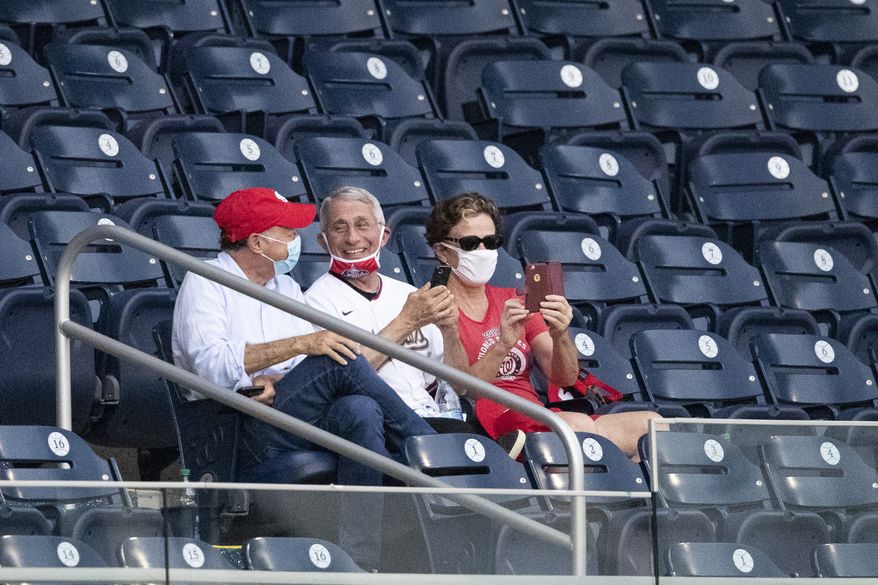


 The Passing Scene
